Which dehumidifier fits the damp room you actually have
The bedroom closet smells musty by August. The window glass is wet at dawn, and the towels in the bathroom never dry all the way through. That is usually the moment people start shopping for a dehumidifier, and the first thing they hit is a wall of numbers: pints, square feet, tank sizes, watts.
Those numbers do not line up at face value. Shinco and Electactic both sell 80-pint machines, and both tie that figure to 95°F and 90 percent relative humidity, a muggy extreme. ToLife sells a small tub with a 95 oz tank that it rates at 1 liter per day, so it plays in a different class altogether.
ENERGY STAR notes that dehumidifier size is usually measured in pints per 24 hours. It also says certified models exist for both portable and whole-home units. Read pints per day first, and the room-size claim second.
The Shinco SDZ1-80P adds Wi-Fi control and a short drain hose. The Electactic Max has three fan speeds, three modes and, by Electactic's own claim, a 43 dB low setting. The ToLife TZ-C2 trades capacity for a compact body, a color-changing night light and a price that sits far below the other two.
Pick by room first. A damp bathroom or closet and a hallway that stays humid need different amounts of water removal, and the right unit for one is wrong for the other.
If you need a built-in pump or a crawl-space workhorse, look at the Shinco 7,000 sq ft model with a pump instead. The three here are plain home units that drain by tank or hose.
01
Shinco · 80-pint Energy Star dehumidifier with Wi-Fi
Shinco SDZ1-80P: Wi-Fi control, but plan the drain
Shinco 80-Pint Wi-Fi DehumidifierWe recommend4.3 (54 ratings)100+ bought in past month$149.99Power Up on Amazon↗
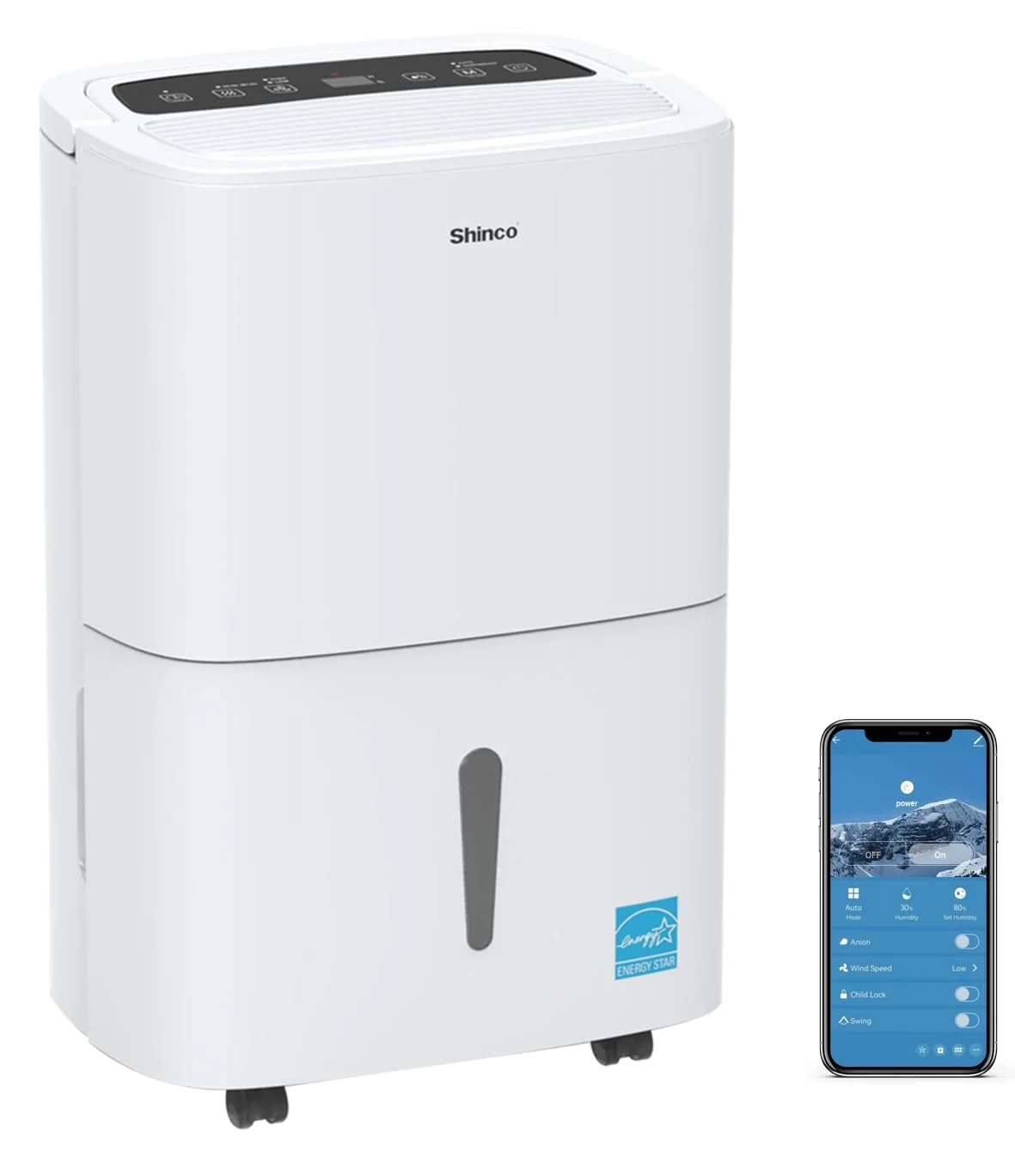
Shinco 80-Pint Wi-Fi Dehumidifier: product photo
Datasheet · from the Shinco page
Specifications from the product page
Room size
5000 square_feet
Capacity
80 pints
Settings
2
Size
9.45"D x 13.5"W x 20.16"H
Material
Plastic
In the box
Drain Hose
Model
SDZ1-80P
Works with / fits
Room size (brand): up to 5,000 sq ft
From the Shinco product page
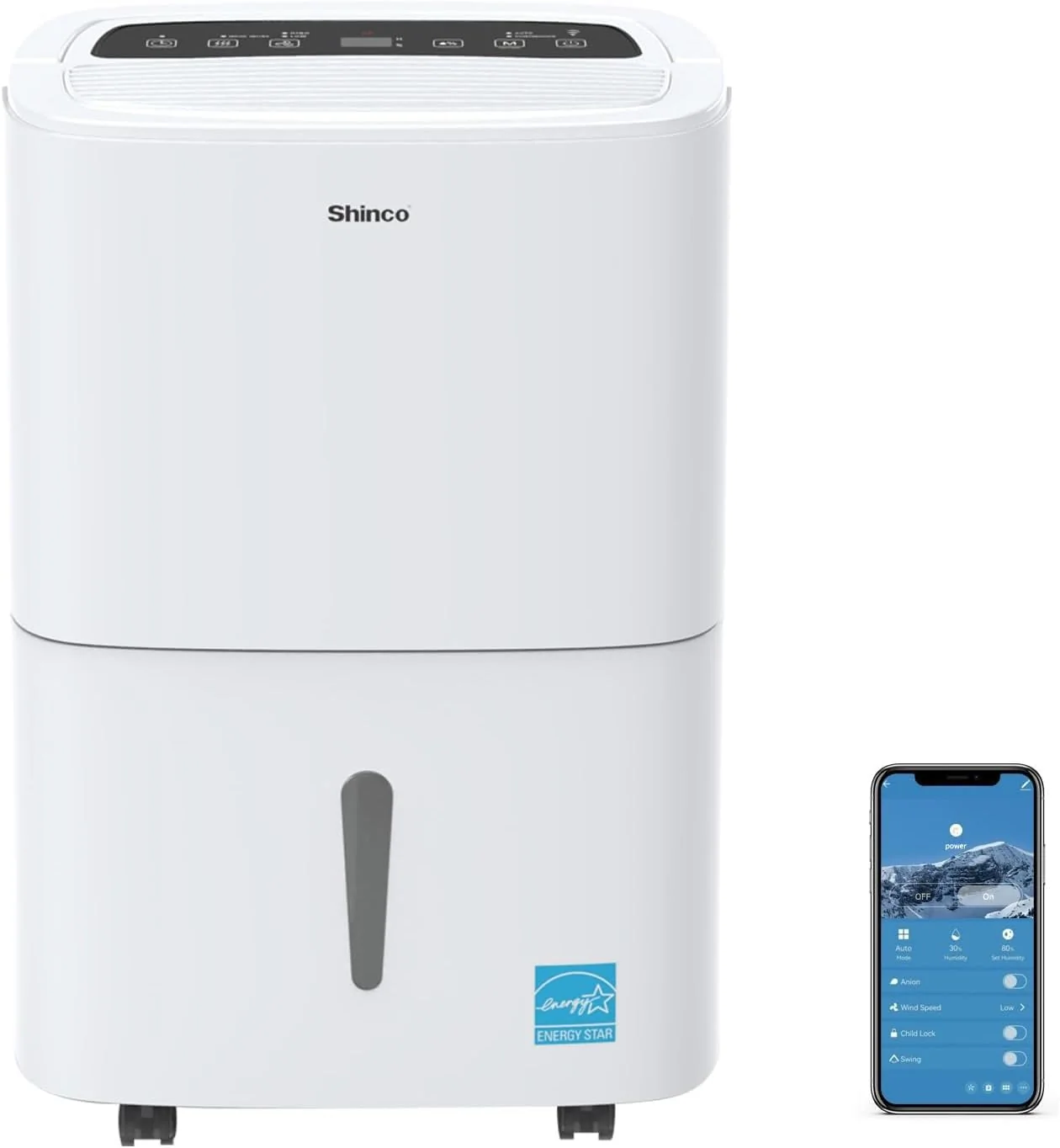
Shinco's SDZ1-80P is 20.16 inches tall, 13.5 inches wide and 9.45 inches deep. That narrow footprint slips beside a washer or into a hallway corner. It rolls on 360-degree wheels, and Shinco describes a hideaway handle for moving it.
The headline claim is 80 pints a day over up to 5,000 square feet. Shinco ties both numbers to 95°F and 90 percent relative humidity. A cooler, drier room will not pull the full 80 pints, so treat that figure as a ceiling.
Humidity sets from 30 to 80 percent in 5 percent steps. Shinco suggests aiming for 45 to 55 percent. The EPA, in its guide to mold and moisture, says to keep indoor humidity below 60 percent, ideally between 30 and 50 percent, so the low end of Shinco's range is the one that matches the agency's advice.
In auto mode, Shinco says the compressor shuts off once the room drops more than 5 percent below your target, and the fan follows. When humidity climbs more than 5 percent above the target, both restart on their own. The machine will cycle on and off around your set point instead of running flat out.
Control comes from a touch panel or a phone over Wi-Fi. Shinco lists one-tap humidity presets and 24-hour smart scheduling in the app, plus a separate 24-hour timer, two fan speeds and a child lock. Holding the mode button for 3 seconds locks the panel.
Drainage is the part to plan. The tank holds 5 liters, or 1.32 gallons, and an FL code appears with a shutoff when it fills.
A 23.6-inch hose is included for continuous draining into a floor drain, and Shinco states plainly that no water container comes with it.
Do the math at the brand's own rating: 80 pints is 10 gallons, more than seven tank fills in a day. In a damp room the hose is the practical way to run this machine, which means a floor drain or a bucket you supply has to sit within two feet. Two feet is short.
The product title calls it an Energy Star model, and the details list a washable filter, automatic defrost and automatic restart. Buyers have rated it 4.3 stars across 54 ratings, with roughly one in fourteen giving a single star. That is a small base, so the average could move.
Most written buyer reviews for it belong to a smaller 30-pint sibling in the same family, so they say little about the 80-pint unit. Treat the star spread as the better guide, and check the warranty terms before you count on a replacement.
Who should skip it? Anyone without a drain who does not want to walk a 1.32-gallon tank to the sink several times a day, and anyone who wants the bigger tank of a pump model. Renters in a small, mildly damp room are paying for capacity they will not use.
02
Electactic · 80-pint dehumidifier
Electactic Max: a quiet claim and a spec table that disagrees
Electactic Max 80-Pint DehumidifierRecommended, with caveats4.8 (26 ratings)$199.99Power Up on Amazon↗
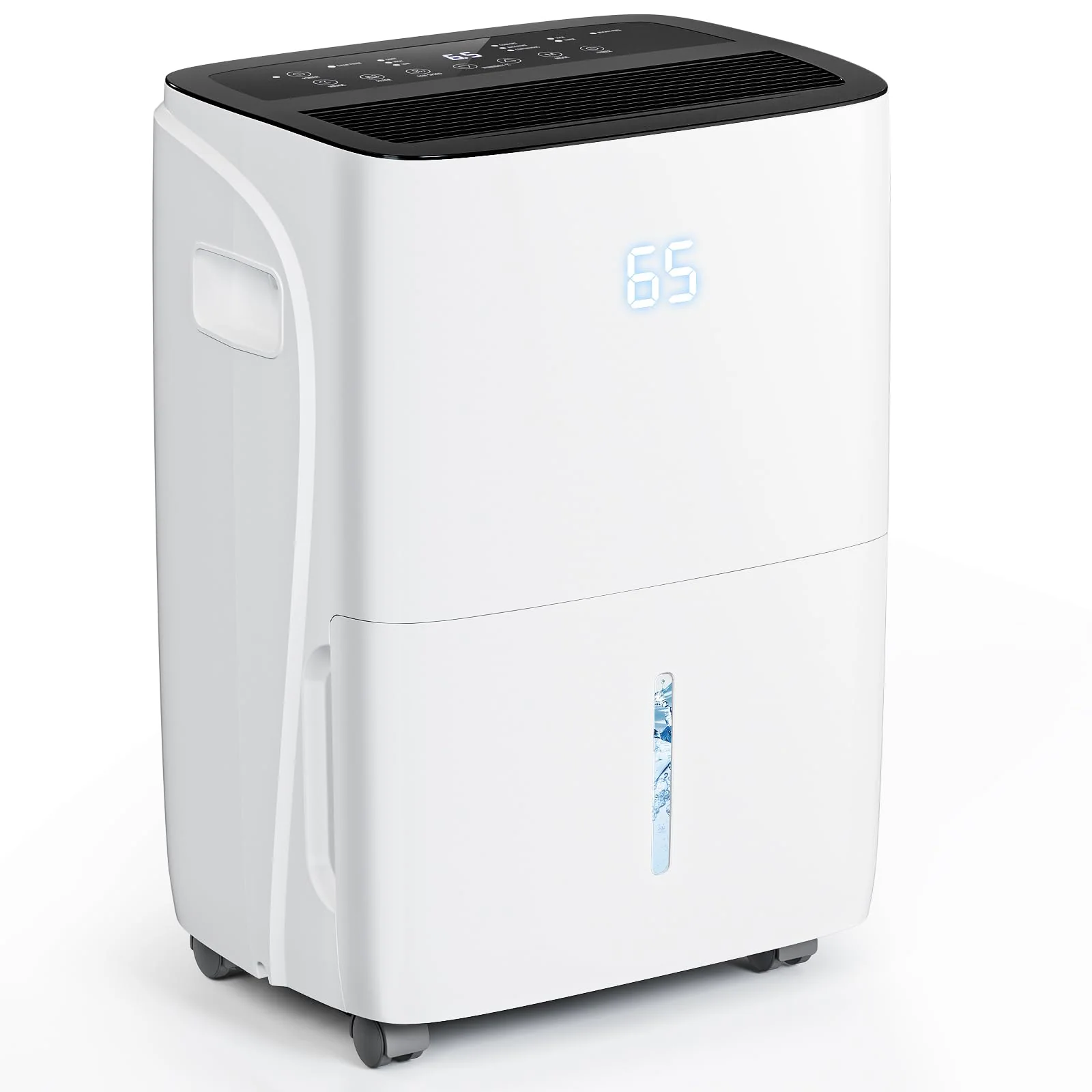
Electactic Max 80-Pint Dehumidifier: product photo
Datasheet · from the Electactic page
Specifications from the product page
Room size
4500 square_feet
Capacity
80 pints
Settings
3
Size
19.57"D x 10.87"W x 14.13"H
In the box
1* Dehumidifier, 1*User Manual, 1*Drain Hose
Model
D025D-25Pt3
Works with / fits
Room size (brand): up to 4500 sq ft
From the Electactic product page
The Electactic Max is the one with the most visible knobs. Its page lists three modes, Comfort, Basement and Continuous, and a humidity range of 35 to 80 percent. Three fan speeds are named Low, High and Quiet.
The brand claims 80 pints a day over 4,500 square feet at 95°F and 90 percent relative humidity. The tank holds 1.06 gallons and shuts the unit off when full, with an alert to tell you. A 3.28-foot drain hose comes in the box, longer than the hose on the Shinco, so it reaches a drain that sits a few feet away.
Electactic says it runs as low as 43 dB, and calls it a fit for bedrooms and offices. That is the brand's figure, not a measurement from anyone here, and noise in a real room depends on the fan speed. The Quiet setting exists for exactly that reason.
There is also a catch. The headline and the capacity line say 80 pints, but the dehumidification capacity line says 25 pints per day.
The model name is D025D-25Pt3. Those two numbers describe different classes of machine, and a buyer should settle which one is right before paying.
That contradiction is the main reason this unit is a conditional pick. Check the manual or the rating label on the carton for the real pint figure, and compare it against the rooms you need to dry.
Electactic also lists a 24-hour timer, a child lock, a filter reminder and what it calls triple safety protection.
The filter is removable and washable, the tank is visible, and the unit rolls on 360-degree swivel casters with carry handles. Dimensions are roughly 14 by 11 by 20 inches, and a user manual ships with it.
Star ratings run high at 4.8 from 26 buyers, and none gave fewer than four stars. Critical buyer reviews are few, which is a function of how new the page is, not proof that nothing goes wrong. A thin base can swing quickly after a few bad units.
Choose it when you want a brand-claimed noise figure, a longer drain hose and manual control of fan speed.
We don't recommend it if you need Wi-Fi control, if you are buying strictly for 80 pints a day, or if you need a proven track record over a year or two. No buyer has reported a year of use yet.
03
ToLife · thermoelectric dehumidifier with 95 oz tank
ToLife TZ-C2: small, cheap and only for small spaces
ToLife 95 oz Thermoelectric DehumidifierRecommended, with caveats4.3 (5,426 ratings)$59.99Power Up on Amazon↗
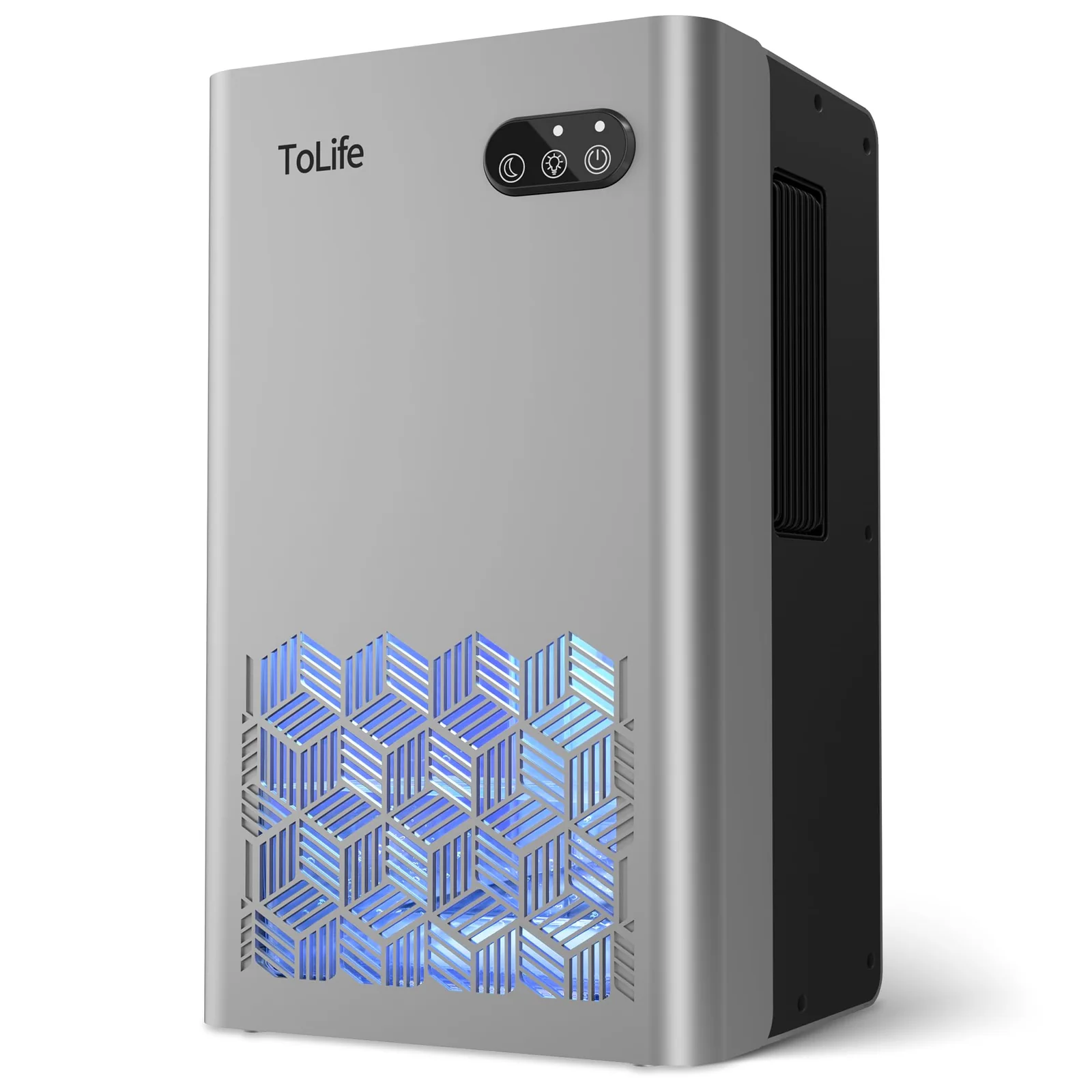
ToLife 95 oz Thermoelectric Dehumidifier: product photo
Datasheet · from the ToLife page
Specifications from the product page
Room size
1000 square_feet
Capacity
95 fluid ounces
Settings
2
Power
93 watts
Airflow
95 gpm
Voltage
220 volts_of_alternating_current
Size
8.2"D x 5.5"W x 13.7"H
Weight
2.66 kg
Material
Plastic
In the box
User Manual
Model
TZ-C2
Works with / fits
Room size (brand): up to 1000 sq ft
From the ToLife product page
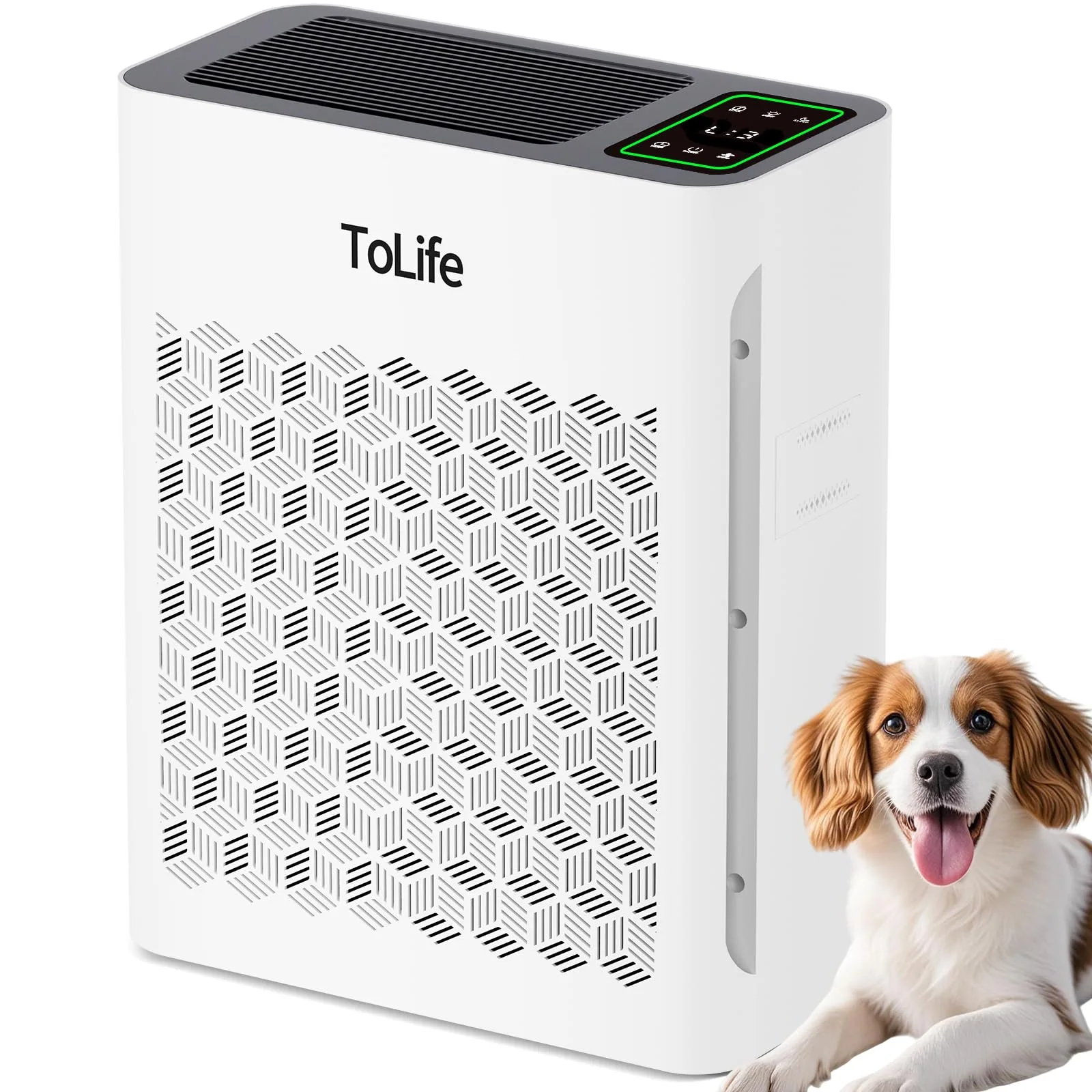
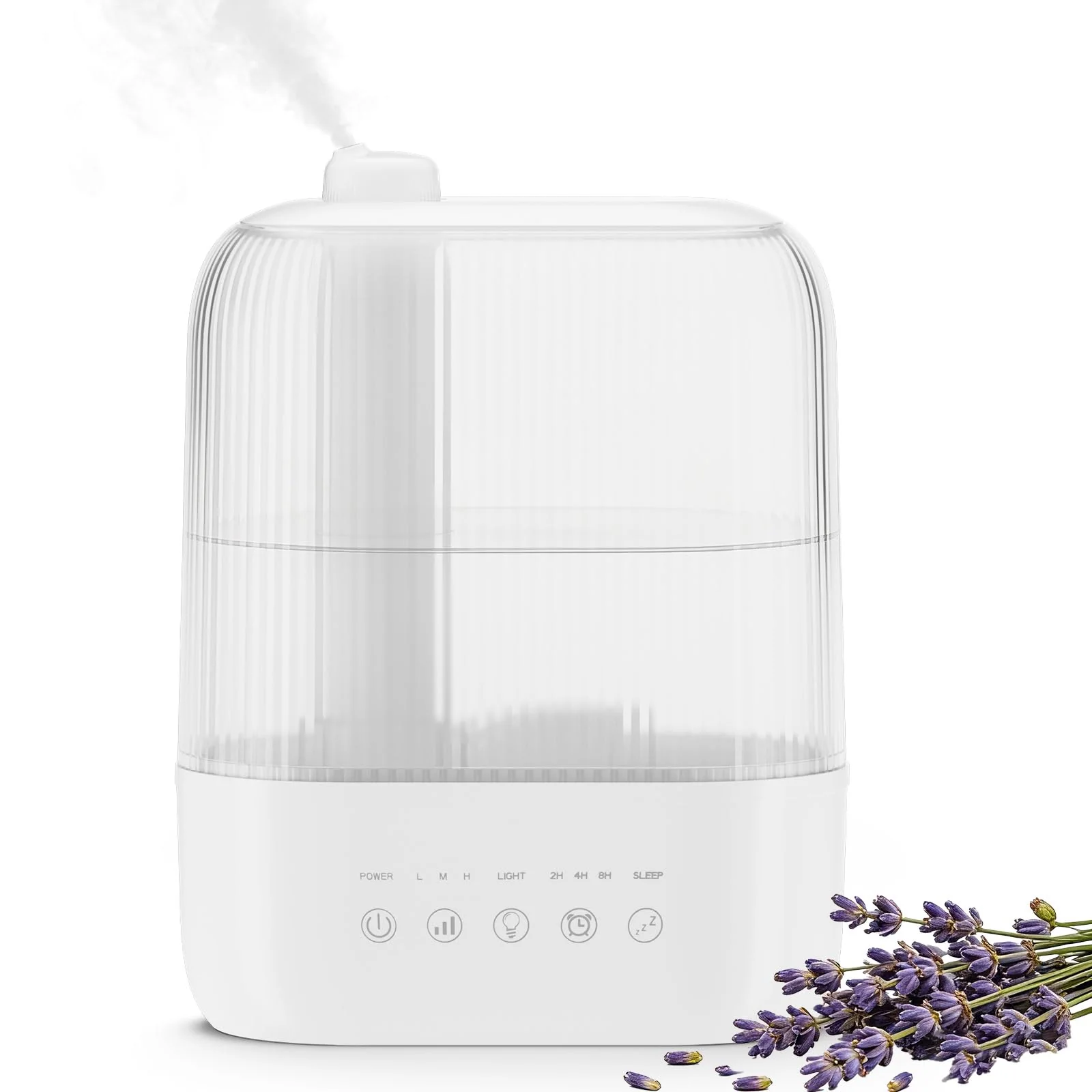
The ToLife TZ-C2 is a different kind of machine. ToLife describes semiconductor condensation, the thermoelectric approach, instead of a compressor. It measures about 8.2 by 5.5 by 13.7 inches, weighs 2.66 kg and draws 93 watts, all per the product page.
The rated moisture removal is 1 liter per day, a small fraction of the 80 pints on the other two machines. The tank holds 95 fluid ounces, and the unit stops on its own if the tank is full or not seated. ToLife also lists two modes: a stronger one and a low-speed sleep mode that it rates under 30 dB.
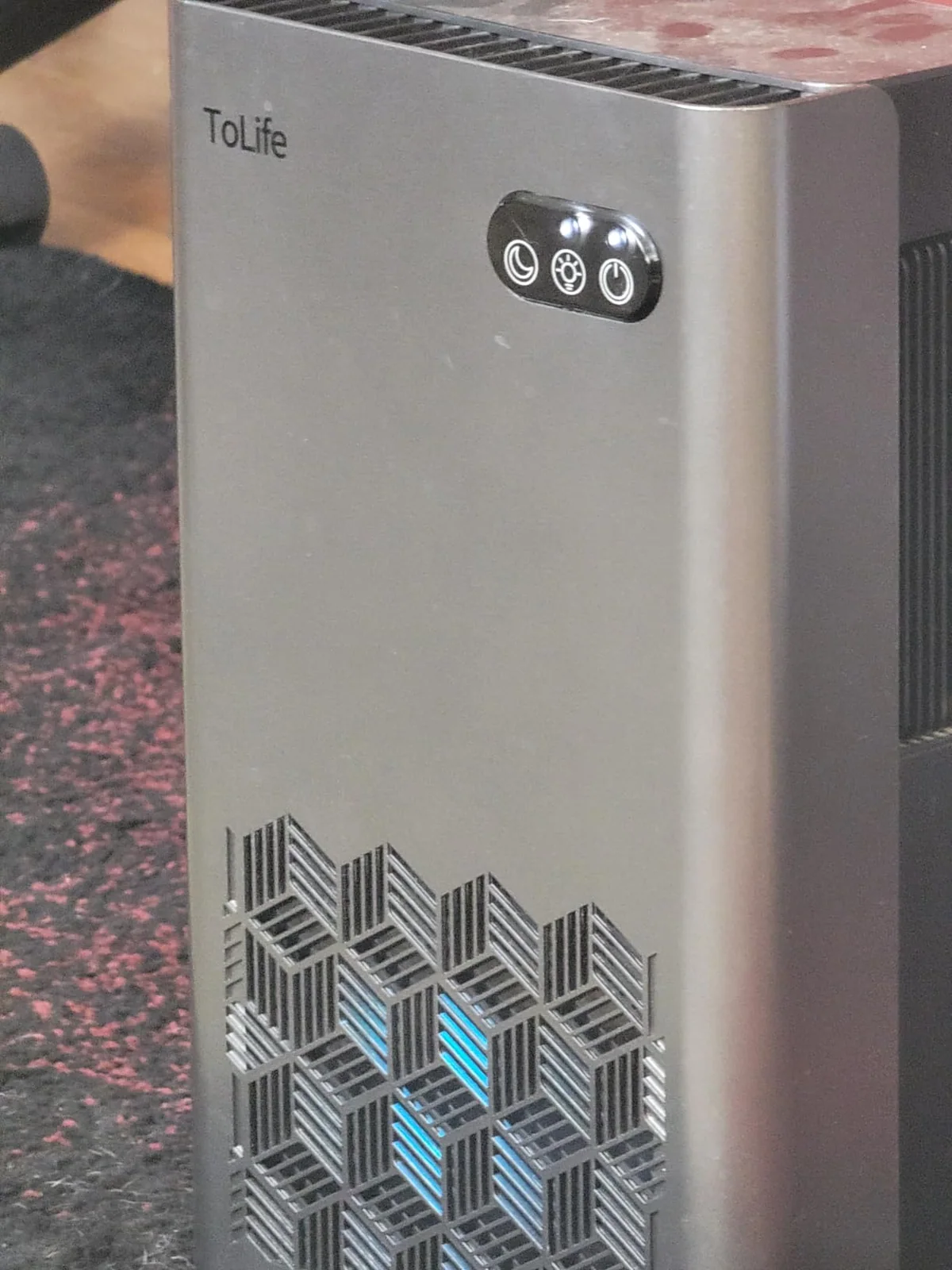
Seven color options with a lock setting turn it into a night light. One buyer says the lights are not obnoxious and can be switched off. Another says lighter colors sometimes come with a white cord, which only matters if the cord shows.
The brand says it covers up to 1,000 square feet, and buyers do not agree.
A Canadian reviewer with an unfinished basement section of about 300 square feet likes it, but doubts it works for a space much past 400. Another, in a 900-square-foot bungalow, says it works fine.
The negative side is sharper. One reviewer calls the 1,000 square foot claim totally false and says the best use is a tiny linen closet. Another says the piece that signals a full tank fell out of the drawer on day one, so the unit would not run.
This is a dehumidifier for a smaller space, so don't buy it thinking it will keep your huge basement dry
Buyer review of the ToLife 95 oz Thermoelectric Dehumidifier, Canada, June 23, 2024
Durability is mixed. A reviewer who used it in a bathroom for two years writes that mold issues stopped.
Another says it worked great for about a year and then stopped collecting water. Both are a single buyer's experience, but the spread of outcomes matches the 9 percent of buyers who gave one star.
The tank size shapes daily use. Buyers fill it in a few days in a bathroom, in four or five days in a semi-basement bedroom, and about a week in a small place.
One buyer with a large open slab says it fills the reservoir in about a day in high humidity. That is a tank to carry to the sink often.
One buyer says there are no filters to clean. That saves a chore, though it also means the water you empty is the only evidence it is working. Rated at 4.3 from 5,426 buyers, and priced at $59.99, it is the easy entry point.
Who should buy it: someone with a closet, a small bathroom, a dorm room or a nursery who wants low noise and a small body. Who should skip it: anyone drying a whole basement, a large open floor or a space where the tank would fill overnight.
What buyers wrote about the ToLife 95 oz Thermoelectric Dehumidifier
5 out of 5Perfect for a smaller basement apartment
We have this unit to dehumidify the unfinished section of our basement. It's about 300sqft. This dehumidifier does a great job, and is extremely quiet. I don't think it would work with a space much larger than maybe 400sqft. This is a dehumidifier for a smaller space, so don't buy it thinking it will keep your huge basement dry. This is a for a room / small basement. Good price if it's on sale. The LED lights aren't obnoxious and can be turned off.
3 out of 5Stops collecting water after a year
Worked great for about a year. Stopped working recently. It is not filling up with water at all anymore.
1 out of 5Don’t buy
This humdifier is awful, takes next to nothing out of the air. I think it said it’d work for a 1000 sq ft which is totally false, the best it work for is a tiny little linen closet. Do yourself a favour and skip this, I ended up buying a Britsou which works amazing and takes 15 litres out of the air a day
5 out of 5An absolute beast.
I bought this as a 2nd unit because I'm so happy with the one I already have. I use it in a large open space on a slab and it will fill the large reservoir in about a day in high humidity.
Customer photo via Amazon review (the United States, October 18, 2026)
4 out of 5Smaller than expected
It works well but even for a bedroom it's a little bit small. For the price, I expected the unit to be bigger. That being said, it's cute, does the job, not too noisy, I like the colours. I filled mine in 4-5 days in a semi basement bedroom
How the three differ on capacity, drainage and noise
a damp apartment or laundry room with a floor drain nearby
a bedroom or office, where the brand claims a 43 dB low
a closet, bathroom or small bedroom under a few hundred square feet
a basement or crawlspace with a sump or floor drain nearby
a crawl space or storage room that is far too big for a home unit
Capacity is where they split first. Shinco and Electactic both claim 80 pints a day at 95°F and 90 percent relative humidity, while ToLife rates its machine at 1 liter per day. If your room needs real water removal, only the first two are in the right class, and only if Electactic's spec table is wrong about 25 pints.
Drainage splits next. Shinco includes a 23.6-inch hose and a 1.32-gallon tank, and Electactic includes a 3.28-foot hose and a 1.06-gallon tank.
ToLife has a 95 oz tank and no hose, so you carry it to the sink. For a unit you cannot visit every day, the hose is the deciding feature.
Control differs too. Shinco adds Wi-Fi, one-tap presets and scheduling from a phone, plus a 24-hour timer. Electactic has three modes, three fan speeds and a filter reminder, and ToLife keeps it to two modes and a night light.
On noise, the numbers are the brands' own claims. Electactic says 43 dB at the low end, and ToLife says under 30 dB in sleep mode.
Shinco gives fan speeds and a timer instead. A quieter figure on a machine that moves less water is not a win by itself.
Size follows capacity. Shinco and Electactic are floor units about 20 inches tall, while ToLife stands 13.7 inches and weighs 2.66 kg by its own spec. Buyer evidence is deepest for ToLife and thinner for the other two, so read it as a caution more than a ranking.
When another way to dry a room makes more sense
A bathroom fan or an open window can be the better first move when the problem is shower steam. The EPA says to run the bathroom fan or open the window when showering, and that condensation can be a sign of high humidity. A machine fixes humidity that lingers, and a fan prevents the spike.
An air conditioner is a second route. The EPA says to use air conditioners and/or dehumidifiers when needed. If you already cool a bedroom in summer, an AC may cover part of the problem, though it does nothing for a closet or a laundry room that gets no cooling.
A thermoelectric tub like the ToLife is better than a full-size compressor machine in a closet, a camper or a nursery where space, noise and weight matter more than liters per day. It is worse in any room with a serious moisture problem, since its rated removal is 1 liter a day.
A unit with a built-in pump is better when the drain sits higher than the machine or farther than a gravity hose can reach. A commercial machine is better for a large crawl space or a warehouse. The Shinco 7,000 sq ft model with a pump covers the first case, and the Shinco 200-pint commercial unit covers the second.
Whole-home dehumidifiers also exist. ENERGY STAR says certified models are available for both portable and whole-home units. They suit a house with humidity problems in several rooms, though they are a larger project than rolling a single machine into a bedroom.
What buyers report about size, noise and lifespan
Shinco 80-Pint Wi-Fi Dehumidifier
4.3 (54 ratings)100+ bought in past month
5 star69%
4 star15%
3 star5%
2 star4%
1 star7%
Electactic Max 80-Pint Dehumidifier
4.8 (26 ratings)
5 star84%
4 star16%
3 star0%
2 star0%
1 star0%
ToLife 95 oz Thermoelectric Dehumidifier
4.3 (5,426 ratings)
5 star71%
4 star12%
3 star5%
2 star3%
1 star9%
The ToLife has the deepest set of buyer reports, and the main theme is room size. Reviewers love it in a 300-square-foot basement section, a small bungalow and a bathroom. They sour on it when the claim of 1,000 square feet meets a larger space.
Noise gets few complaints. One buyer calls it extremely quiet in a basement apartment, and another says it isn't too loud. The fault most often named is the small tank, along with the occasional unit that arrives with a loose part or stops working after a year.
The ToLife star spread skews high, with 71 percent of ratings at five stars. Nearly one in ten buyers gave a single star, and one in eleven of the rest sit between two and three. Those low scores cite the same two issues: a unit that does too little, and a unit that quits.
Across 54 ratings, Shinco's spread shows 69 percent at five stars, 15 percent at four, and 7 percent at one. The written reviews on that page belong mostly to a smaller family member, so the spread is the useful part. It reads as a well-liked machine with a few failures.
Electactic's 26 ratings are all four or five stars, which is a hopeful start and nothing more. Until buyers have run it through a humid season, the spec mismatch is the thing to watch.
Worked great for about a year. Stopped working recently. It is not filling up with water at all anymore.
Buyer review of the ToLife 95 oz Thermoelectric Dehumidifier, Canada, January 17, 2026
This humdifier is awful, takes next to nothing out of the air.
Buyer review of the ToLife 95 oz Thermoelectric Dehumidifier, Canada, July 4, 2024
Once the humidity rises more than 5% RH above the target, the dehumidifying unit and the fan will restart automatically
Shinco product page
Ratings, star breakdowns and “bought in past month” figures were read on the product pages on November 16, 2026.
How to set up and drain a home dehumidifier
Drainage decides whether the machine stays useful or turns into a chore. Both 80-pint units can run with a hose into a floor drain. Plan the route before you buy a longer hose, and check the manual for any limit on hose length or slope.
Set a target between 30 and 50 percent if you follow the EPA, and keep it below 60 percent at the least. Shinco steps in 5 percent increments from 30 to 80, and Electactic goes from 35 to 80.
When the tank fills, the unit shuts itself off, and the Shinco shows an FL code. Empty the tank, seat it fully, and restart.
ToLife stops if the tank is full or not placed correctly, so a loose tank is the first thing to check.
Set the unit where air can reach it, with the hose side toward a floor drain if you plan to drain continuously.
Attach the included drain hose to the outlet, and lead it into a floor drain or a bucket you supply.
Pick a humidity target. The EPA says to keep indoor humidity below 60 percent, ideally 30 to 50 percent.
If the display shows FL on the Shinco, remove the tank, empty it and seat it again.
Clean the washable filter on the Shinco or the Electactic when its reminder comes on or the airflow drops.
On the ToLife, check that the tank sits fully in place if the unit stops, then empty it every few days.
Our picks and who should look elsewhere
We recommendShinco 80-Pint Wi-Fi Dehumidifier
A solid pick for big, humid rooms when the hose reaches a drain, though the rating base is still small.
We recommend the Shinco SDZ1-80P for a large, humid room where a floor drain sits within a short hose run. It has the clearest feature set of the three, with Wi-Fi, a 24-hour timer and a humidity range that reaches the EPA's 30 to 50 percent band. The rating base is small, and the drain is the part you must plan.
We don't recommend it if you cannot drain it. A 1.32-gallon tank against an 80-pint rating means constant trips to the sink, and a pump model would suit that room better.
The Electactic Max is a conditional pick. Its brand-claimed 43 dB low and 3.28-foot hose suit a bedroom or office, and the star ratings are high. But the spec table lists 25 pints a day against a headline of 80, and until you confirm which is right, we would not buy it for a serious damp room.
The ToLife TZ-C2 is also conditional, and we'd pick it only for a closet, a small bathroom or a nursery. Buyers who tried it in bigger spaces say it did next to nothing, and the 1,000 square foot claim has not held up in their rooms.
If you have a basement, a crawl space or a drain that sits above the floor, skip all three and look at a pump or commercial model. For a small room with a mild problem, the ToLife costs $59.99, and that gets you most of what a small room needs.
Questions buyers ask
Which is better for a bedroom, the Shinco or the Electactic?
The Electactic Max is the easier bedroom pick on paper, because the brand says it runs as low as 43 dB and offers a Quiet fan setting. The Shinco SDZ1-80P gives two fan speeds, a timer and Wi-Fi control instead of a decibel figure. Confirm Electactic's real pints per day before buying, since its spec table says 25.
Is the ToLife dehumidifier good for a basement?
The ToLife TZ-C2 fits only a small, closed basement section. ToLife rates it for 1,000 square feet, but one reviewer with a 300 square foot section thinks 400 is the limit, and another says it is too weak even for that claim. For a whole basement, a larger compressor unit is a better bet.
How many pints a day do I need in a home dehumidifier?
Match pints per 24 hours to how wet the room is, since ENERGY STAR says that is how capacity is usually measured. Shinco and Electactic claim 80 pints at 95°F and 90 percent humidity, while the ToLife is rated at 1 liter per day. A closet or small bath needs the small number, and a whole damp floor needs the large one.
How do I drain the Shinco dehumidifier continuously?
Attach the included 23.6-inch hose to the Shinco SDZ1-80P and lead it into a floor drain, and water empties by itself. Shinco says no water container is supplied, so you need a drain or a bucket of your own. Otherwise the 1.32-gallon tank shuts the unit off with an FL code when full.
What humidity level should I set a dehumidifier to?
The EPA says to keep indoor humidity below 60 percent, ideally between 30 and 50 percent. The Shinco sets from 30 to 80 percent in 5 percent steps, and the Electactic from 35 to 80 percent, so both reach the EPA's band. Shinco itself suggests 45 to 55 percent for comfort.
Does the ToLife thermoelectric dehumidifier need filters?
The ToLife TZ-C2 needs no filter changes according to a buyer who says there are no filters to clean. It uses semiconductor condensation, and the unit shuts off when its 95 oz tank is full or not seated. Expect to empty that tank every few days, or about once a day in a humid space.
Sources
This review touches on electrical, fire or indoor-air safety. It is general information, not professional advice: follow the product's manual, and ask a licensed electrician or HVAC technician about wiring, circuits and installation.
 Air · buyer's guide